

How to Hack Your Heart
The science backed way to control your heartbeat and regulate stress using a simple breathing technique

What if I told you that there’s a way to change your emotional state, reduce stress, and build inner resilience using nothing more than your breath?
I’ve recently learnt about heart coherence breathing – a deceptively simple practice that syncs the rhythms of your body and mind. And today I want to share it with you. No special tools, no elaborate techniques – just the power of your breath, focused awareness, and a little emotional intention.
What Is Heart Coherence?
Heart coherence is a physiological state in which the heart’s rhythm becomes more ordered and harmonious. It often arises when we tap into regenerative emotions like appreciation, compassion or gratitude. This state can be measured using heart rate variability (HRV) – the naturally occurring changes in the time between heartbeats.
When HRV follows a smooth, wave-like pattern, the body is in coherence. In this state, our systems – especially the brain, heart and nervous system – are in better communication with each other. Think of it as inner alignment. A nervous system in balance. A body and mind working together instead of pulling in different directions.
The Science Behind It
The heart has its own nervous system – sometimes referred to as the “heart-brain.” It communicates with the head-brain through the vagus nerve, influencing our emotional states, our attention, and even our decision-making. When we are in a coherent state, this heart-brain connection becomes more fluid and effective.
This process involves the autonomic nervous system – the body’s internal regulator. It's made up of the sympathetic branch (which activates us for action) and the parasympathetic branch (which calms us down). Heart coherence brings these two systems into balance.
Why It Matters
When you practise heart coherence breathing regularly, you’re not just calming yourself in the moment – you’re retraining your nervous system. Over time, this can lead to:
Emotional regulation – Less reactive, more responsive
Mental clarity – Improved focus, creativity, and decision-making
Physical wellbeing – Better cardiovascular health, reduced inflammation, stronger immunity
Greater resilience – The capacity to stay grounded in the face of stress or emotional overwhelm
This is self-regulation at the deepest level – not by bypassing or repressing your feelings, but by creating the physiological conditions for inner safety and stability.
Heart Rate Variability: A Quick Primer
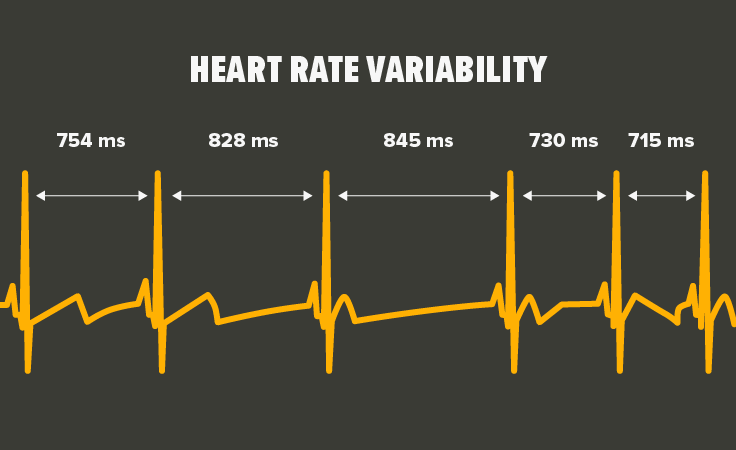
HRV is one of the clearest indicators of nervous system flexibility. It’s the variation in time between each heartbeat – and contrary to what you might think, more variation is better.
A high HRV suggests your system is adaptable, able to shift smoothly between activation and rest. A low HRV, on the other hand, can signal that your body is stuck in a stress response, unable to recover efficiently.
Heart coherence breathing trains your system to become more fluid, more resilient. It strengthens the very rhythm of your aliveness.
How To Practise Heart Coherence Breathing
You don’t need to download an app or buy a sensor (although tools like HeartMath’s Inner Balance are available if you want to go deeper). You can begin right now, with a few minutes of simple practice.
1. Heart-Focused Breathing
This is the foundational technique:
Sit or lie down somewhere quiet and comfortable
Close your eyes and gently bring your attention to the area around your heart
Begin to breathe in and out slowly through your nose – about 5 seconds in, 5 seconds out
Breathe as if your breath is flowing in and out of your heart
Continue for 2-5 minutes
Even on its own, this practice can shift your state.
2. The Quick Coherence Technique
This adds an emotional layer:
Start with heart-focused breathing
Then recall a moment or feeling of genuine appreciation, care or gratitude
Let that feeling fill your awareness as you continue to breathe
This isn’t about faking positivity. It’s about gently inviting a felt sense of wellbeing, no matter how small.
3. Movement-Based Variations
Heart coherence can also be practised in motion:
Walking in nature while breathing in rhythm
Gentle, flowing practices like tai chi or qi gong
Swimming, cycling, or dancing – when done with awareness and steady breath
When To Practise
First thing in the morning – to set the tone for your day
Before a difficult conversation or stressful event
During moments of anxiety, overwhelm or sadness
At night to help you wind down and sleep more deeply
This is a simple, embodied practice that reconnects you to your own centre. Over time, it becomes less of a technique and more of a way of being – a way of relating to yourself, and to life, from the inside out.
If you’re curious and want to practice with me, check out my guided practice session on Insight Timer.
