

When your dreams speak an ancient language
Amplification connects personal symbols to archetypal meaning

You’re in your dream, and a snake appears. You wake up unsettled. You ask yourself what snakes mean to you personally—maybe you’re afraid of them, or maybe you find them fascinating. That’s useful. That’s where dreamwork starts.
But here’s what most people miss: your psyche didn’t choose a snake randomly. Snakes have carried meaning for humans for thousands of years. They’ve represented healing, transformation, danger, wisdom, and creative power across cultures and centuries. When your unconscious chooses a snake, it’s drawing on all of that—not just your personal history.
This is where amplification comes in. It’s the practice of enriching a symbol’s personal meaning by connecting it to its archetypal dimension—the patterns and themes that appear across human experience. And it’s what transforms dreamwork from interesting self-reflection into something genuinely revelatory.
What amplification actually is
Amplification is the process of exploring how a dream symbol has appeared across myths, fairy tales, religious traditions, art, and cultural practices throughout human history. Jung believed these recurring patterns point to the collective unconscious—a shared reservoir of human experience that lives beneath our individual psychology.
When we amplify a symbol, we’re asking: “How has humanity understood this image? What has it represented across cultures and time?”
The answer is never just one thing. Symbols are rich, multi-layered, and often contradictory. A snake can be both poison and medicine, both threat and healer. That complexity is exactly what makes amplification so valuable.
Why personal associations aren’t enough
Your individual relationship with a symbol is essential. If you were bitten by a dog as a child, that personal history matters when a dog appears in your dream. But if we stop there, we risk flattening the symbol into a single meaning—”dogs = danger”—and missing what your psyche is actually trying to communicate.
Amplification prevents this reduction. It reveals dimensions of meaning you might not be able to access through memory alone:
It honours complexity: Symbols carry multiple, sometimes contradictory meanings. Amplification helps you hold that complexity rather than collapsing it into something simplistic
It reveals patterns: When you see that your symbol appears in ancient myths or spiritual traditions, you recognise you’re touching something larger than your individual experience
It invites depth: Amplification moves dreamwork from “What does this mean?” to “What is this inviting me to become?”
How to amplify a symbol
Amplification doesn’t require a degree in mythology. It requires curiosity and a willingness to explore. Here’s where to start:
Research mythological parallels: Look for stories, myths, or fairy tales featuring your symbol. What happens in those stories? What transformations occur? What does the symbol enable or prevent?
Explore cultural meanings: How has your symbol been understood across different traditions? What role does it play in various spiritual or religious contexts? Notice both similarities and differences.
Notice archetypal patterns: Does your symbol connect to universal themes—death and rebirth, the hero’s journey, the wise elder, the shadow, the sacred feminine or masculine, the quest for wholeness?
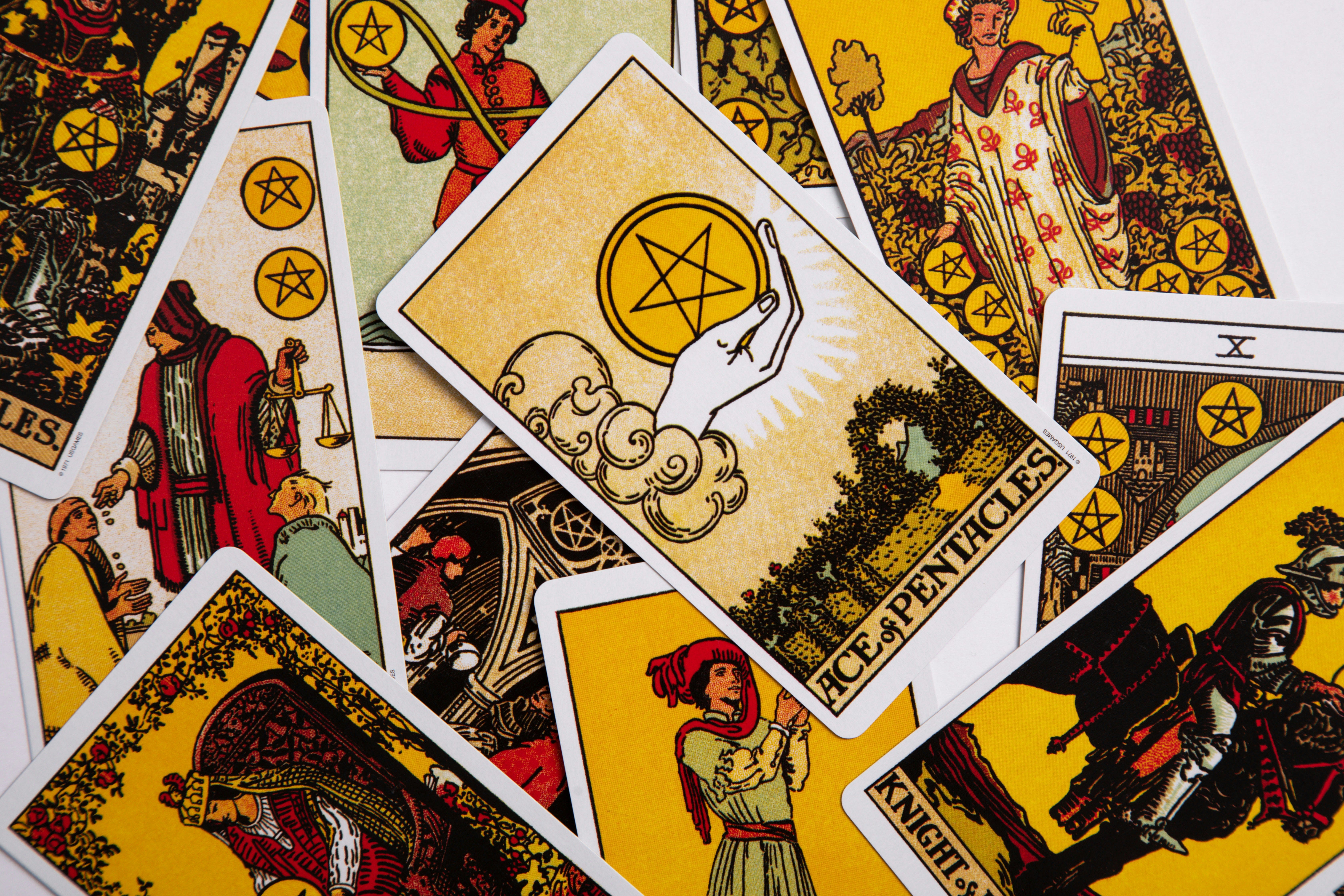
Consider adjacent symbols: In Tarot and oracle card systems, symbols are often grouped by theme or energy. If your dream symbol appears in these systems, what company does it keep? What qualities or transitions is it associated with?
The balance between personal and archetypal
The real art of dreamwork is holding both dimensions together. Your unique, personal relationship with a symbol gives it emotional weight and specificity. Its archetypal dimension gives it resonance and depth.
Neither alone is sufficient. A purely personal interpretation risks being too narrow; a purely archetypal reading risks being too abstract. But when you bring them together—when you see how your snake connects to the snake as humanity has known it—the symbol comes alive. It reveals not just what it means, but what it’s asking of you.
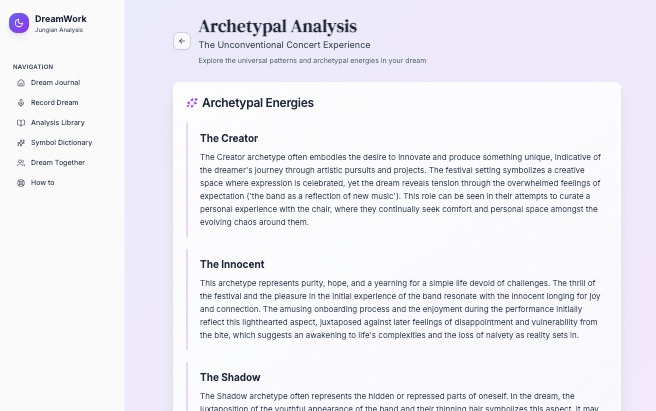
I’ve created a Dream Analysis app that guides you through this process step by step. After you share your dream, the app helps you gather personal associations and then provides archetypal amplifications drawn from Jungian psychology, mythology, and cross-cultural symbolism. If you haven’t tried it yet, give it a go.
Did you know? The app’s Archetypal Analysis feature automatically identifies universal patterns in your dreams and explains their significance across cultures! It draws on Jung’s work with archetypes, comparative mythology, and symbolic traditions to show you how your personal dream connects to themes that have appeared throughout human history. You don’t need to research myths yourself—the app brings that context directly into your analysis.
Join in and go deeper
Try the Dream Analysis App (AI-supported Jungian dreamwork): dreamwork.universalmind.coach
Sit with others at the free monthly Dream Circle
Looking for more personalised guidance, let’s explore 1:1 Coaching!
Wishing you restful sleep, vivid dreams, and the curiosity to listen.
Paz
The distinction between personal association and archetypal amplification is one of the most underappreciated moves in depth psychology. Most people stop at 'what does this mean to me?' — which is necessary but incomplete. What you're describing is the moment dreamwork becomes genuinely transformative: when the symbol stops being about your history and starts revealing what your psyche is reaching toward. The snake isn't just your fear — it's the entire human relationship with transformation, shedding, and the intelligence that lives beneath the skin. That's the shift from interpretation to encounter. Beautiful framework.